Unaccountable by Design: The Emergency Spending Loopholes Draining Municipal Coffers in Plain Sight
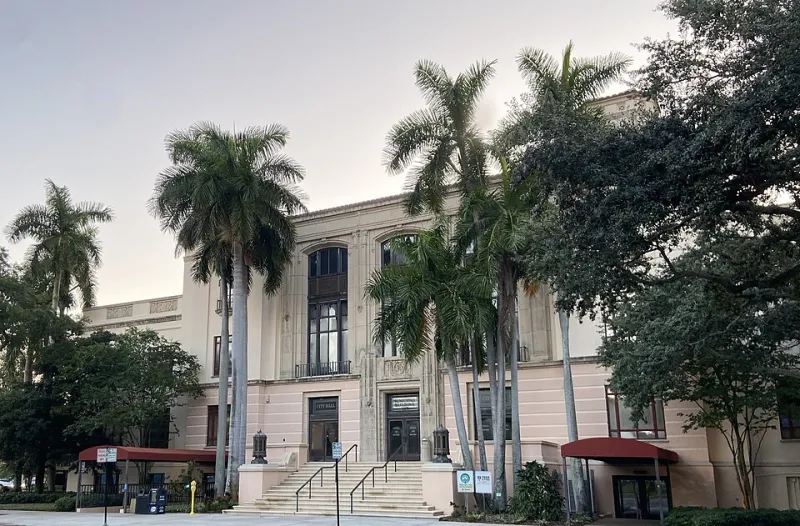
Photo: Myotus, CC BY 4.0, via Wikimedia Commons
Every municipal budget that passes through a city council chamber arrives with considerable fanfare. Public hearings are scheduled. Line items are debated. Residents are invited to comment. The process, however imperfect, carries at least the appearance of democratic accountability.
What receives far less attention is what happens after that budget is approved—specifically, the financial authority many city charters quietly reserve for administrators and elected officials to spend public money outside the ordinary appropriations process. In municipalities across the United States, emergency spending provisions function as a parallel budget: one that operates in the shadows, rarely surfaces in community meetings, and frequently escapes the scrutiny that routine expenditures are expected to withstand.
What Emergency Funds Actually Are
Most city governments maintain some form of contingency or emergency reserve. On paper, the rationale is sound. Natural disasters, infrastructure failures, and public health crises can demand immediate financial responses that cannot wait for the next scheduled council vote. Giving administrators limited authority to act quickly in genuine emergencies is a reasonable governance design.
The problem lies in how broadly the term "emergency" is interpreted—and how rarely that interpretation is questioned.
In practice, emergency spending designations have been applied to everything from legitimate flood damage repairs to consulting contracts awarded without competitive bidding, legal settlements negotiated outside public view, and construction overruns on projects that had been inadequately planned from the outset. Because the triggering classification—"emergency"—is often self-determined by the same officials authorizing the expenditure, the mechanism carries an inherent conflict of interest.
City charters in many jurisdictions permit mayors or city managers to authorize emergency spending up to a defined threshold—sometimes as high as $500,000 per incident—without council approval. When multiple expenditures are each kept just below that threshold, the cumulative impact on a municipal budget can be substantial, yet no single transaction ever triggers the oversight mechanisms designed to catch it.
The Classification Problem
A recurring pattern in municipal finance audits involves the retroactive justification of emergency designations. Expenditures that might have qualified for standard procurement review are approved quickly under emergency authority, with documentation assembled afterward to support the classification. Auditors in cities including Houston, Baltimore, and Cleveland have flagged instances where emergency procurement was used to circumvent competitive bidding requirements—not because time constraints made standard processes impossible, but because the emergency label offered a convenient shortcut.
This is not merely a procedural concern. Competitive bidding exists to protect taxpayers from inflated costs and to ensure that public contracts are awarded on merit rather than relationships. When emergency designations become routine administrative tools rather than genuine last resorts, those protections erode.
The communities most likely to bear the consequences are those least positioned to push back. Lower-income neighborhoods often lack the organized civic infrastructure—active neighborhood associations, engaged local journalists, well-resourced advocacy groups—that might otherwise flag unusual spending patterns. Meanwhile, wealthier districts with stronger civic networks are better equipped to demand explanations when public funds are deployed without adequate justification.
How Emergency Spending Stays Hidden
Transparency in emergency expenditures is inconsistent at best and deliberately obstructed at worst. Some cities post emergency spending notices in official publications or on municipal websites, but these disclosures are often buried in technical language, published with minimal context, and rarely accompanied by the kind of plain-language explanation that would make them meaningful to the average resident.
In many cases, emergency expenditures appear in financial reports only after the fact—sometimes months later, in quarterly or annual summaries that receive little public attention. By the time the information is technically available, the spending decision is long concluded, contracts are executed, and the window for meaningful public response has passed.
Freedom of Information Act requests remain one of the most reliable mechanisms for residents who want to examine emergency spending in their jurisdiction. However, the process requires knowing what to ask for. Vague requests are frequently returned with incomplete responses. Specific, targeted requests—framed around particular fund designations, date ranges, and transaction types—yield far more useful results.
What Residents Can Do
Engaged residents have more leverage than they may realize, provided they approach the process systematically.
Request the contingency fund ledger. Most cities maintain a separate ledger for contingency or emergency expenditures. A public records request specifically targeting this ledger—covering the past two to three fiscal years—will typically reveal how frequently the fund has been accessed, the amounts involved, and the stated justifications for each transaction.
Examine emergency procurement records. When emergency designations bypass standard bidding, procurement records should still exist. Request the sole-source justification documents associated with any emergency contract. These documents are required in most jurisdictions and will often reveal whether the stated rationale for bypassing competition was genuinely time-sensitive.
Cross-reference with council minutes. Emergency expenditures that were authorized administratively—without council approval—should eventually appear in council meeting records, either as ratification items or budget amendment notices. Comparing these records against the actual spending ledger can expose gaps where expenditures were never formally reviewed.
Engage the city auditor. Most mid-size and large American cities have an independent municipal auditor or inspector general whose mandate includes reviewing expenditure irregularities. Filing a formal inquiry with this office, particularly when specific discrepancies have been identified, is often more effective than direct engagement with the departments responsible for the spending.
Build coalitions around the data. Individual residents requesting records are easier to dismiss than organized groups presenting documented findings. Sharing records requests and analysis with neighborhood associations, local journalists, and civic organizations amplifies the pressure on officials to respond substantively.
The Broader Accountability Question
Emergency spending authority is not inherently problematic. Governments must be able to act quickly when circumstances demand it. The issue is the absence of robust post-expenditure accountability—the expectation that every dollar spent under emergency authority will be subjected to rigorous review, publicly explained, and measured against the standard of genuine necessity.
Several cities have moved toward stronger disclosure frameworks in recent years. Some now require emergency spending to be posted online within 72 hours of authorization. Others have established automatic council review thresholds that trigger a formal ratification process for expenditures above a certain amount, regardless of how they were initially classified. These models demonstrate that speed and accountability are not mutually exclusive—that governments can act quickly in genuine emergencies while still preserving the public's right to know how their money was spent.
For residents, the goal is not to paralyze municipal government with procedural demands during actual crises. It is to ensure that "emergency" remains a meaningful designation rather than an administrative convenience—and that the money spent under its authority is as visible, as justified, and as accountable as every other dollar in the public budget.
Your city's finances belong to you. The tools to examine them are available. Using them consistently is how communities ensure that emergency powers serve the public interest rather than circumvent it.