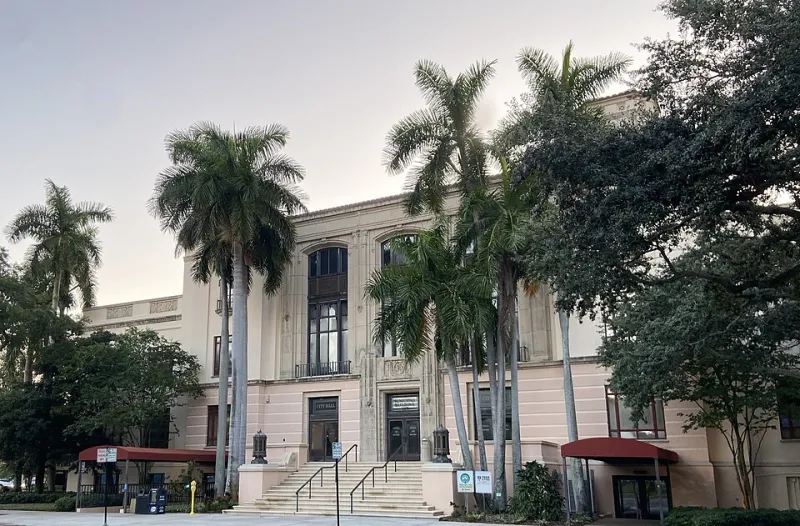
The Comment Gap: Who Really Speaks at City Hall—and Who Gets Left Out of the Record

Every city council meeting agenda carries some version of the same invitation: members of the public are welcome to address the council. The phrase implies openness, equality, and democratic access. What the agenda does not disclose is the substantial body of evidence suggesting that the residents who actually take advantage of that invitation represent a narrow and demographically skewed cross-section of the broader population.
Public comment is one of the primary formal mechanisms through which residents can influence municipal decision-making. It is also, according to an increasing body of civic research, one of the most demographically unrepresentative processes in local government. Understanding the shape of that gap—and the structural forces that produce it—is essential for any community that genuinely wants its government to reflect the full range of its residents' concerns.
Who Shows Up—and Why the Numbers Matter
Studies of public participation in local government consistently find that comment period participants skew older, whiter, more affluent, and more highly educated than the general population of the municipalities they represent. Homeowners participate at substantially higher rates than renters. English-speaking residents participate at dramatically higher rates than those whose primary language is something other than English.
This is not a matter of interest or civic commitment. Research repeatedly demonstrates that residents across demographic groups care deeply about local issues—housing costs, school quality, public safety, infrastructure conditions. The disparity in formal participation reflects structural barriers, not differential levels of concern.
Those barriers are well-documented and, in most cases, entirely within a city's power to address. The fact that most cities have not done so is itself a meaningful data point about whose input municipal administrators actually prioritize.
Language as a Barrier to the Record
Federal law requires certain municipalities to provide language assistance at public meetings when a significant portion of the population speaks a language other than English. The threshold for that requirement, and the quality of the assistance actually provided, varies considerably.
In practice, many cities with substantial non-English-speaking populations offer translation services that are inadequate, inconsistent, or available only upon advance request—a requirement that itself presupposes familiarity with a process that many residents have never navigated. When interpretation is provided by an untrained volunteer rather than a qualified interpreter, the quality of communication degrades in ways that may not be apparent to English-speaking officials in the room.
The result is that public comment records in cities with diverse linguistic populations often underrepresent the concerns of non-English speakers by a factor that bears no relationship to their actual share of the population. A rezoning decision that will directly affect a predominantly Spanish-speaking or Vietnamese-speaking neighborhood may be made on the basis of comment data that contains almost no input from those residents.
Meeting Schedules as Gatekeeping Mechanisms
The timing of public meetings is rarely discussed as a policy choice, but it functions as one. Council meetings held on weekday afternoons or early evenings create structural barriers for residents who work hourly jobs, lack reliable transportation, or have caregiving responsibilities that cannot be easily rearranged.
A 6:00 p.m. meeting may seem accommodating on paper. For a resident who works a closing shift, relies on public transit, or is responsible for children after school, it is frequently inaccessible. The residents most likely to attend a weekday evening meeting are those with flexible professional schedules and private transportation—a profile that correlates predictably with income, occupation, and race.
Cities that have moved public meetings to rotating schedules, offered Saturday morning sessions, or provided virtual participation options have documented measurable increases in the demographic diversity of participants. These are not complicated interventions. They require political will, not significant resources.
The Structural Amplification of Organized Voices
Beyond individual barriers, public comment processes tend to systematically amplify the voices of organized groups at the expense of unorganized individuals. Neighborhood associations, business improvement districts, and advocacy organizations with established relationships with city staff are often notified of relevant decisions earlier, have greater capacity to mobilize members, and are more likely to submit written comments that enter the formal record.
Residents who lack organizational affiliation—which disproportionately includes renters, recent immigrants, young adults, and lower-income households—are less likely to learn about relevant decisions in time to participate, less likely to understand the procedural steps required to submit comment, and less likely to have their individual concerns aggregated into a form that carries political weight.
This structural advantage for organized groups is not inherently illegitimate. Organizations often represent genuine community interests. The problem arises when the comment record is treated as a representative sample of community opinion rather than what it actually is: a filtered and structurally biased subset of public sentiment.
What Equitable Participation Actually Requires
Addressing the demographic blindspot in public comment data is not primarily a technical challenge. It is a political one. Cities that have made meaningful progress have done so by treating participation equity as a policy goal, not an aspiration.
Specific interventions with documented effectiveness include:
Proactive multilingual outreach. Notifying residents of pending decisions through channels they actually use—community radio, ethnic media outlets, social media platforms popular in specific linguistic communities—rather than relying exclusively on official websites and print notices that many residents never encounter.
Paid community liaisons. Several cities have employed residents from underrepresented communities as paid liaisons responsible for conducting outreach, explaining processes, and facilitating participation. This approach has shown particular effectiveness in communities with low baseline participation rates.
Written comment by mail and drop-box. Allowing residents to submit written comments by physical mail or through neighborhood drop-boxes removes the requirement to attend a meeting in person—a significant barrier for many residents.
Demographic auditing of comment participation. Cities that collect and publish demographic data on public comment participants can identify gaps and measure the impact of interventions. Without this data, participation equity remains an aspiration with no accountability mechanism.
What Residents Can Demand
For residents who want to change the demographic profile of participation in their city's public comment process, the most effective entry point is often a direct demand for transparency.
Request that your city publish demographic data on public comment participants for major decisions. Ask your council representative to commit to holding at least some public meetings at times and locations accessible to working residents. Advocate for the adoption of multilingual outreach standards that go beyond minimum federal requirements. And consider partnering with community organizations that have established relationships with underrepresented populations to co-host public input sessions outside of formal municipal settings.
The comment record is a document that shapes decisions. Who appears in it—and who does not—is not a neutral outcome. It is the product of choices that cities make, and choices that cities can change.