Frozen in Time: How Rigid Municipal Maintenance Calendars Fail the Neighborhoods That Need Help Most
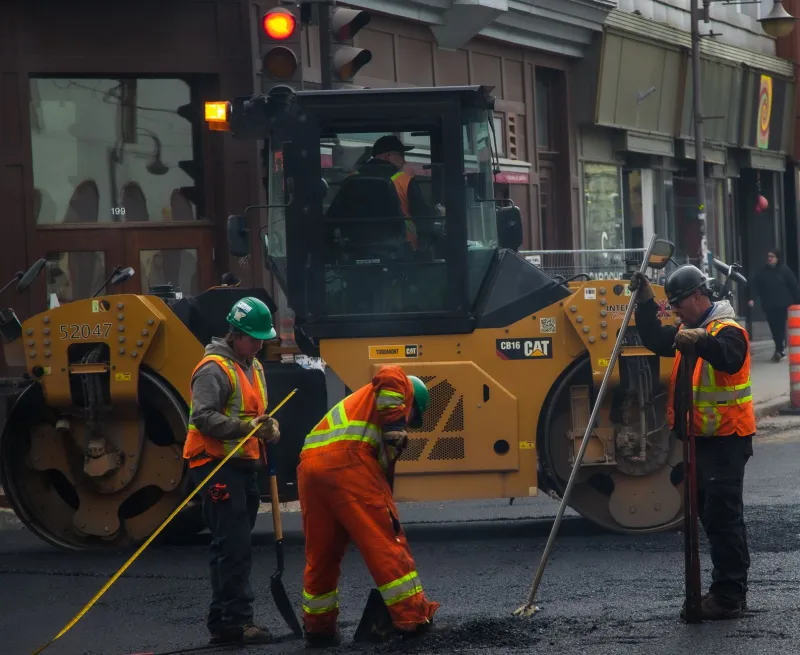
Every spring, public works crews fan out across American cities with the reliability of migratory birds. They patch the potholes that opened over winter, flush the storm drains that clogged in autumn, and repaint the crosswalk markings that faded months ago. The rhythm feels orderly, even reassuring. But for residents who watched those crosswalk markings disappear in October and spent the intervening months navigating an intersection that had become genuinely dangerous, the arrival of a paint crew in April is not a comfort. It is a reminder that their city operates on its own schedule—one that has very little to do with their neighborhood's actual needs.
Municipal maintenance calendars are, in most American cities, remarkably static documents. They are built around seasonal logic, budget cycles, and departmental convenience. Pothole patching happens in spring because asphalt crews prefer warm weather. Tree trimming is scheduled in late summer because that is when the relevant contractors are available. Sidewalk inspections follow a rotating district map that ensures every neighborhood gets a look every three or four years, regardless of what is happening on the ground between visits. The system has an internal coherence that makes sense from a planning perspective. From a resident's perspective, it can feel like waiting for a bus that runs on a schedule nobody posted.
The Calendar as a Policy Document
What most residents do not recognize is that a city's maintenance calendar is, in effect, a policy document. It encodes decisions about which conditions are tolerable, which neighborhoods can wait, and how much deterioration must accumulate before it triggers a response. Those decisions are rarely debated publicly. They are made by department directors, inherited from previous administrations, and embedded in work-order software that few outside city hall ever examine.
In practice, this means that a pothole reported in November in many cities will not receive a permanent repair until the following spring season opens—even if it sits on a heavily trafficked street in a neighborhood with significant pedestrian activity. Temporary cold-patch fixes may be applied, but the underlying repair gets queued for the next scheduled cycle. Meanwhile, a similar defect reported in March, just as the repair season opens, may be addressed within weeks.
Residents who have documented this pattern describe a frustrating experience. Marcus Delgado, a community organizer in a mid-size Midwestern city, spent two winters photographing a stretch of sidewalk near an elementary school that had buckled severely enough to create a tripping hazard. He submitted requests through the city's online portal, attended a public works committee meeting, and followed up repeatedly with his council member's office. Each time, he was told the repair was on the schedule. "They weren't lying," he said. "It was on the schedule. It just wasn't on this year's schedule. Or the next year's."
How Scheduling Decisions Get Made—and Who Gets Left Out
Most municipal maintenance calendars are constructed through a combination of historical precedent, departmental budget requests, and a prioritization rubric that assigns points to different types of defects. A sidewalk with a one-inch vertical displacement might score lower than a pothole of equivalent danger simply because the rubric was designed at a time when the city's liability exposure from sidewalk falls was considered lower than from vehicle damage.
These rubrics are rarely reviewed with public input. They are technical documents, and they tend to remain technical documents until a lawsuit or a high-profile incident forces a reexamination. Even then, the review is typically internal.
The result is a system in which neighborhoods with older infrastructure—often lower-income communities—accumulate maintenance backlogs faster than the calendar can address them. Because the schedule is fixed, the backlog simply grows. A neighborhood that scores consistently lower on the prioritization rubric will receive less frequent attention, which allows conditions to worsen, which eventually produces scores high enough to trigger intervention—but only after years of documented neglect.
Dynamic Scheduling: What a Better System Looks Like
Some cities have begun experimenting with demand-responsive maintenance models that supplement fixed seasonal schedules with real-time condition data. These approaches use a combination of resident reports, sensor data, and automated pavement condition assessments to identify deterioration as it occurs and route crews accordingly.
The city of Kansas City, Missouri, for example, has invested in pavement sensor technology that generates continuous condition scores for major corridors, allowing the public works department to identify streets approaching critical deterioration thresholds before they reach the point of requiring expensive reconstruction. Similar programs in Boston and Los Angeles have used crowdsourced resident data, collected through mobile reporting apps, to supplement annual inspection cycles.
The technology exists. The barrier, in most cities, is institutional. Dynamic scheduling requires dispatchers and supervisors to work with more complex information than a static calendar provides. It requires departments to accept that priorities may shift mid-season. And it requires political will to allocate resources based on condition data rather than district equity formulas that, while well-intentioned, often perpetuate rather than correct historical imbalances.
What Residents Can Do Right Now
While systemic reform requires sustained advocacy, residents have several concrete tools available to challenge static scheduling practices.
First, request the maintenance calendar itself. Most cities are required to produce this document in response to a public records request. Reviewing the calendar alongside your own neighborhood's service history—also available through records requests—can reveal whether your community is receiving attention at a frequency consistent with its infrastructure age and condition.
Second, document deterioration with dated photographs and formal written reports. A single resident complaint carries limited weight; a documented record showing that a specific defect was reported multiple times over multiple seasons, without resolution, carries considerably more. Organizations like SeeClickFix allow residents to create a public record of outstanding service requests that is visible to other residents and to local journalists.
Third, attend public works committee meetings and ask direct questions about prioritization methodology. Request the scoring rubric used to rank maintenance needs. Ask how frequently it is reviewed, and whether residents have any formal role in that review.
Finally, consider organizing with neighbors to request a neighborhood infrastructure audit—a formal inspection of conditions in your area conducted by city staff and documented in a public report. Several cities have established processes for this kind of community-requested assessment, and it can serve as the foundation for a more sustained campaign to move your neighborhood up the maintenance queue.
The Deeper Question
Rigid maintenance calendars are not, in most cases, the product of malice. They are the product of systems designed for predictability in an environment where predictability is genuinely valuable. But predictability that serves the institution at the expense of the community it is supposed to serve is not a virtue—it is a failure of purpose.
The question residents should be asking their city administrators is not simply when the next scheduled maintenance cycle will reach their block. It is whether the schedule itself reflects the community's actual needs, and whether anyone in city hall is empowered to change course when it does not. In a city that takes civic engagement seriously, that question deserves a direct and transparent answer.